Sleepless Nights in Recovery: What to Do Instead of Reaching for Your Phone

The clock shows 2 AM. Your eyes are wide open. Your mind is racing with worry, regret, and the persistent pull of cravings. You reach for your phone almost without thinking—a habit so automatic you barely notice it happening. But in that moment, you have a choice: you can reach for something else instead.
If you’re in early recovery from gambling addiction, sleepless nights are almost inevitable. The anxiety, guilt, and restlessness that come with breaking an addiction pattern often surface most intensely when the world is quiet and your mind has nowhere else to go. Understanding why these nights happen—and having a plan for what to do instead of scrolling—can make all the difference.
Why Recovery Nights Feel So Long
During the day, you can stay busy. Work, routines, conversations, and distractions keep painful emotions at arm’s length. But when night arrives and your head hits the pillow, everything you’ve been managing suddenly becomes louder.
This isn’t weakness. This is your brain and body processing change. When you remove a coping mechanism—even a harmful one—your nervous system needs time to recalibrate. Gambling often served as an escape from difficult emotions, a way to numb anxiety or distract from shame. Without that escape route, you’re left face-to-face with the feelings themselves.
Sleep disruption is a normal part of recovery. Your brain chemistry is shifting. Your stress response is heightening temporarily as your body adjusts. And yes, your hand habitually reaches for the phone because that’s what you’ve trained it to do.
The good news? This phase is temporary. But while you’re in it, you need a concrete plan.
What You Should Know
Insomnia and restless nights are common in early addiction recovery. This isn’t a sign of failure—it’s your nervous system learning to regulate itself without artificial stimulation. With time and consistent effort, sleep patterns improve.
Replace, Don’t Just Remove
The first rule of breaking a habit is this: don’t try to create a void. Your brain will fight to fill it. Simply telling yourself “don’t reach for your phone” sets up a battle you’ll lose at 3 AM when you’re exhausted and vulnerable.
Instead, prepare alternatives you can actually reach for.
Ground yourself through breath: When anxiety peaks, your nervous system is in overdrive. Box breathing—inhale for 4 counts, hold for 7, exhale for 8—directly signals to your body that you’re safe. This isn’t meditation. It’s neurological regulation.
Engage your senses: Touch something specific. Hold a warm mug of herbal tea. Feel the weight of a blanket. Run your fingers over a smooth stone. When your mind is spiraling, anchoring to physical sensation brings you back to the present moment—and the present moment is always manageable.
Write without filter: Keep a notebook and pen beside your bed. When you can’t sleep, write. Not to journal beautifully or figure anything out. Just to pour the contents of your mind onto paper. Write the worries. Write the cravings. Write the shame. Getting these thoughts outside your head literally reduces their power.
Move gently: You don’t need to exercise. But shifting position, stretching slowly, or doing gentle movements can interrupt the anxiety loop. Progressive muscle relaxation—tensing and releasing each muscle group from toes to head—gives your anxious mind something to focus on.

Build a Bedside Recovery Kit
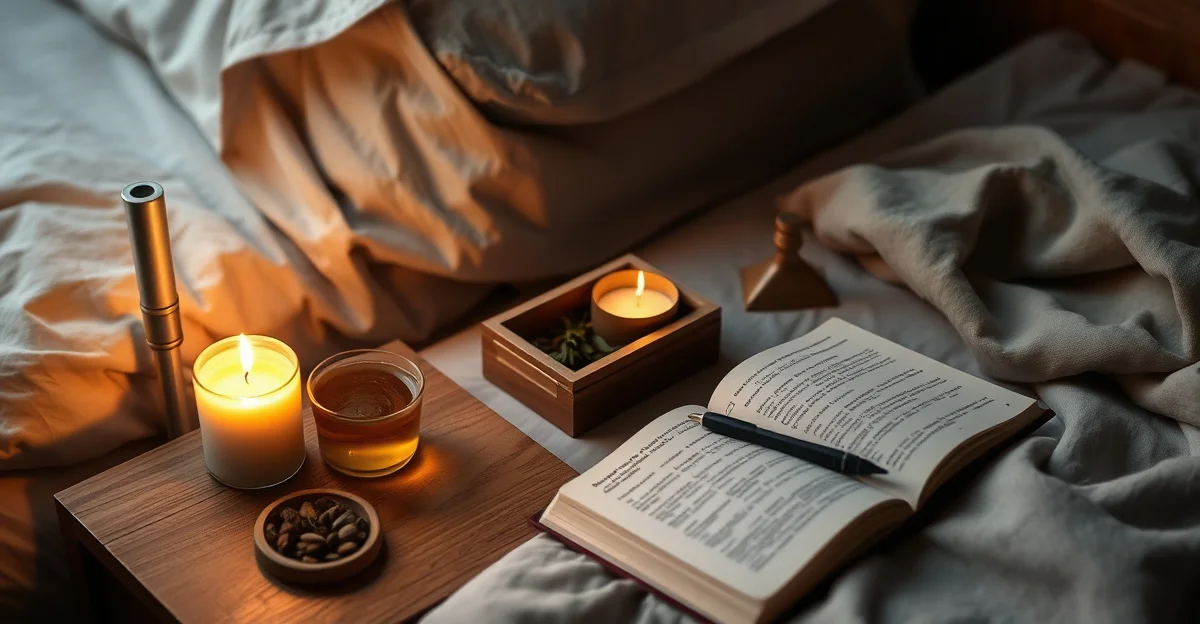
Place a small box next to your bed containing: herbal tea bags, a scented candle or essential oil, a smooth stone or fidget object, a journal and pen, and maybe a comforting letter you write to yourself beforehand. When sleep won’t come, choose one item from your kit instead of your phone. Keep your phone in another room entirely.
Feel Your Emotions Without Acting on Them
Here’s a distinction that matters enormously: feeling an emotion and acting on an emotion are two completely different things.
The 3 AM panic you experience is real. The craving that surfaces is real. But reality isn’t the same as truth. These emotions are temporary neurological states, not facts about your situation or your future.
When anxiety arrives at night, practice observing it rather than fighting it or escaping from it. “My chest feels tight. My mind is racing. I’m experiencing craving right now.” This kind of neutral observation—rather than judgment—transforms the emotion from something that controls you into something you’re simply experiencing.
Emotions move through you like weather. A storm arrives, it’s intense, and then it passes. If you try to run from the storm by reaching for your phone, checking gambling sites, or numbing yourself, you extend it. But if you sit still and let it pass, it moves through naturally.
This is what the hardest part of recovery teaches us: you can feel something and still choose not to act on it. You can experience a craving and not place a bet. You can feel deep anxiety and not escape into your phone. The feeling and the action are separate.
Know Your Vulnerabilities
Once you pick up your phone at 2 AM, you’re one swipe away from social media, news spirals, online shopping, and gambling platforms. Each one is designed to pull you deeper. The path of least resistance leads to relapse. Remove the option entirely by keeping your phone out of your bedroom.
Trust That Morning Always Comes
Every sleepless night feels infinite. But every night, without exception, ends. Morning arrives. A new day begins.
Some nights you’ll sleep poorly despite your best effort. Some nights you’ll lie awake for hours. And some nights, your preparation and persistence will help you rest. All of these nights matter equally because each one you make it through without turning to your phone is a night you’re rewiring your brain and strengthening your recovery.
In those long hours, your only job is to stay present with yourself. Breathe. Feel what you feel. Reach for your recovery kit instead of your phone. Trust that this phase won’t last forever.
The HOLDON app can help you track emotional patterns during difficult nights. By recording what you feel and how you respond, you’ll start to see that emotions follow patterns. Once you understand your patterns, you can prepare for them more effectively. It’s harder to surprise yourself when you know what’s coming.
Mood and Emotion Tracking
Record your nighttime emotions and track patterns over time. Understanding what triggers your sleeplessness helps you respond with intention rather than impulse.
HOLDON 앱에서 확인 →Recovery isn’t won during the day when you’re busy and occupied. It’s won during the difficult hours—the ones when you’re alone with yourself and the choice between old patterns and new ones. Every sleepless night you navigate without your phone is a night you’re choosing yourself.
If you find yourself struggling with intense cravings or emotional distress at night, reaching out for support is a sign of strength, not weakness.
Need help?
- National Problem Gambling Helpline 1-800-522-4700
- Crisis Text Line Text HOME to 741741