Release Tension with 3-Minute Breathing: A Recovery Tool
During gambling recovery, sudden urges and waves of anxiety are a normal part of the process. When these emotional waves hit, your body tightens, your heart races, and your thoughts start spinning. But there’s genuinely good news: a simple breathing technique can help you navigate these moments with real effectiveness.
The challenge isn’t that your emotions are wrong—it’s that you need tools to ride them out until they pass. And one of the most accessible, evidence-backed tools you already have is your breath.
Why Your Breath Matters More Than You Think
There’s a direct connection between how you breathe and how you feel. When you’re anxious or facing an urge, your breathing naturally becomes shallow and rapid. It’s your nervous system’s alarm response. But here’s the powerful part: you can reverse this. By deliberately slowing and deepening your breath, you send a “safety signal” to your nervous system, which naturally calms your emotional state.

This isn’t mystical thinking—it’s physiology. Your nervous system has two main modes: fight-or-flight (which intensifies urges) and rest-and-digest (which settles them). Controlled breathing is one of the few things you can do right now to shift from one mode to the other.
During recovery, learning to use your breath as an anchor gives you back a sense of control. When an urge feels overwhelming, it’s often because your body is in high alert. Breathing intentionally says: “I’m safe. This will pass.”
The Science Behind Calm Breathing
Slow, deliberate breathing activates your parasympathetic nervous system—your body’s natural “pause” button. This lowers stress hormones, reduces heart rate, and creates mental space between an urge and your response to it.
The 3-Minute Breathing Practice
This technique is simple enough to use anywhere, anytime—when you’re at work, at home, or facing a moment of intense urge.
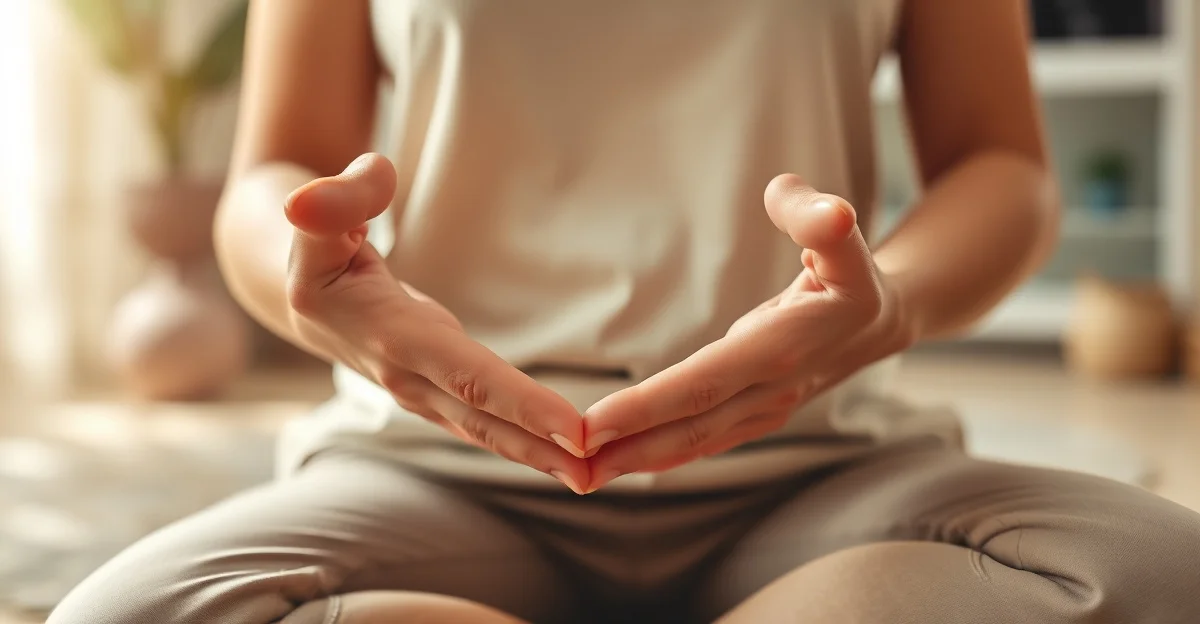
Minute 1: Get Comfortable (30 seconds) Find a position where your body feels supported. Sit upright if possible, or lie down if that’s what you need. Release tension from your shoulders. There’s no “perfect” posture—just something that feels grounded.
Minutes 1–2: The Breathing Pattern (2 minutes) Follow this rhythm:
- Inhale slowly through your nose for 4 counts
- Hold the breath for 4 counts
- Exhale slowly through your mouth for 6 counts
Repeat this cycle 5–6 times. The key detail: your exhale is longer than your inhale. This extended exhale is what signals safety to your nervous system.
Minute 3: Notice and Settle (30 seconds) After the breathing cycles, sit quietly for 30 seconds. Don’t judge what you feel. Just notice: Has your heart rate slowed? Are your shoulders less tense? Is your mind a little clearer?
If 4-4-6 Feels Too Long
Start with 4-4-4 or even 3-3-5. What matters is that your exhale is longer than your inhale. As you practice more, your nervous system learns to respond faster, and you can gradually extend the counts.
Using This Tool During Urges
Here’s what research and recovery experiences show us: urges follow a natural arc. They build, peak, and subside—usually within 15 to 30 minutes. The problem isn’t the urge itself; it’s that it feels like it will last forever.
When you use this 3-minute breathing practice during an urge, you’re not trying to make the feeling disappear. You’re simply buying time and space. You’re telling yourself: “I can handle 3 minutes. I can breathe through this.” Often, by the time you’ve repeated the practice 2–3 times, the intensity has shifted.
Make this a daily habit too. Practice in the morning and evening when you’re calm. This trains your nervous system so that when a real urge hits, your body already knows how to respond. It’s like practice before the game.
Release tension with 3-minute breathing
Use HOLDON's urge timer to ride out the wave until it passes.
HOLDON 앱에서 확인 →Small Practices Build Real Resilience
The first time you try this, it might feel awkward. You might feel self-conscious or wonder if it’s “working.” That’s completely normal. But each time you return to this practice—whether during an urge or as a daily ritual—your nervous system becomes more responsive.
What starts as a technique becomes an anchor. Over weeks and months, calm breathing becomes your body’s signal that you’re safe, you’re grounded, and you can navigate whatever comes next.
Recovery isn’t built on willpower alone. It’s built on small, consistent practices that gradually rewire how you respond to difficult moments. A simple breath. A few minutes. Repeated. That’s enough to create meaningful change.
When to Reach Out for More Support
If urges feel completely unmanageable even after using breathing techniques, or if you’re struggling with overwhelming emotions, reach out to a counselor, support group, or trusted person in your life. Breathing is a powerful tool, but it works best alongside a broader support network.
Need help?
- National Problem Gambling Helpline 1-800-522-4700
- Crisis Text Line Text HOME to 741741