Put Your Phone Down Before Bed: A Small Change That Supports Recovery

It’s 10 PM. You’re in bed, ready to sleep, when your hand automatically reaches for your phone. Sound familiar?
If you’re in recovery from gambling addiction, the hours before sleep are often the most vulnerable. The quiet of the night amplifies feelings of emptiness. Your phone sits there, just one tap away from the apps you’re trying to avoid. The late-night hours are when willpower is weakest—and temptation feels strongest.
The good news? You don’t need more willpower. You need a different environment. And it starts with something simple: putting your phone down before bed.
Why Bedtime Is a High-Risk Time
Nighttime affects people in recovery differently than other times of day. When the bustle of daytime routines fades, so does the structure that keeps your mind occupied. Suddenly, you’re alone with your thoughts—and sometimes those thoughts turn toward gambling.

Late evening is also when your brain is most tired. Between 11 PM and 3 AM, the mental resources you use to resist urges are depleted. Your ability to pause and think clearly about your choices diminishes. It’s the time when you’re most likely to make decisions you’d never make during the day.
For people in recovery, this vulnerability window is real. Your phone becomes the connection point—the device that makes acting on an impulse possible. If you’re holding it, temptation is literally in your hands.
The Neuroscience of Fatigue and Urges
When you’re physically tired, the part of your brain that handles decision-making and impulse control (the prefrontal cortex) becomes less active. This is why late-night urges often feel more intense and harder to resist. Environmental design—like removing your phone—helps bridge that gap.
Environment Design Is More Powerful Than Willpower
Recovery isn’t built on superhuman willpower. It’s built on smart choices about your environment.
Think about it this way: resisting temptation requires energy. Every time you see your phone and choose not to use it, you’re spending mental resources. But preventing the temptation from arising in the first place? That costs almost nothing.
When you put your phone in another room, you create both physical and psychological distance. That distance—even just a few steps—gives you time to pause. Time to remember why you’re in recovery. Time to choose something different.
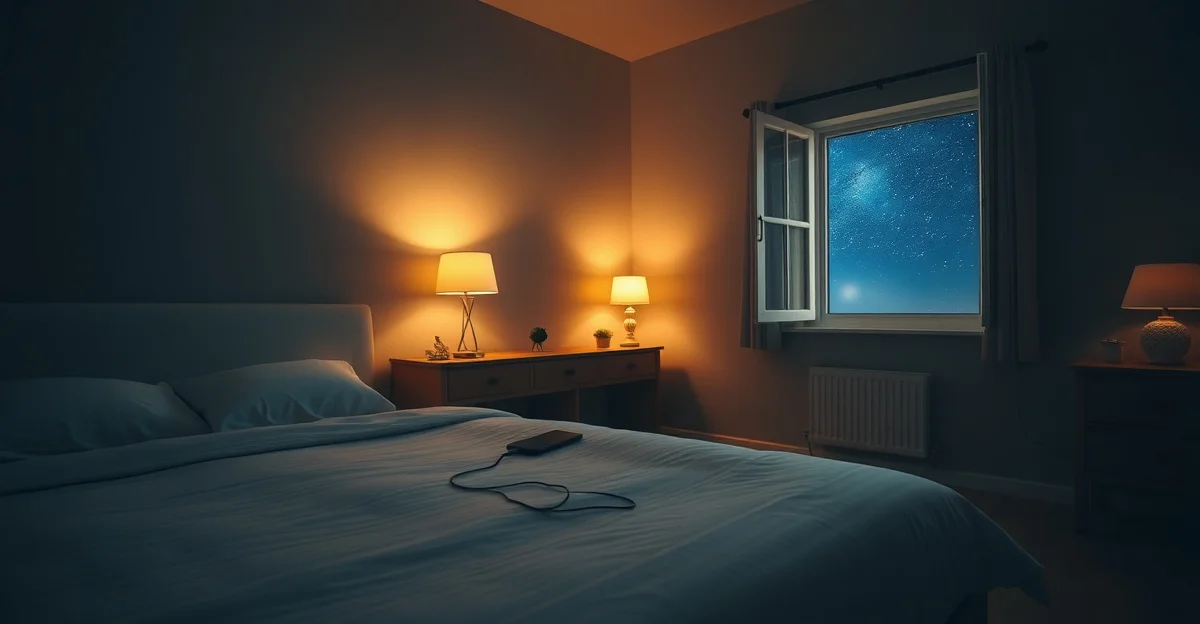
Beyond the practical benefit, the act of putting your phone down carries psychological weight. It becomes a ritual. A signal to your brain: “This is rest time. This is safe time. This is time to be present without distraction.” When you repeat this ritual every night, your brain learns it. A new neural pathway forms. The urge to check your phone gradually weakens because your mind expects something different during this hour.
Your Bedtime Phone Routine: A Step-by-Step Guide
Step 1: Choose Your Time Window Set a specific time each evening when phones go away. Try 1 hour before bed. If you normally sleep at 11 PM, your phone-free time starts at 10 PM.
Step 2: Create Physical Distance Place your phone in another room—the living room, kitchen, or hallway. Charge it there if possible. This isn’t punishment; it’s protection. The inconvenience of retrieving it gives you those crucial seconds to reconsider.
Step 3: Have a Replacement Ready Your brain needs something to do. Prepare an alternative activity in advance:
- Read a physical book (not e-books on a device)
- Do gentle stretching or yoga
- Write in a journal
- Practice breathing exercises or meditation
- Listen to an audiobook or calming podcast
Keep these things within arm’s reach of your bed.
Step 4: Start Small and Stay Consistent Don’t try to change everything at once. One hour phone-free is enough. Do it the same time every night. The first week will feel awkward. By week two, you’ll notice the urge to check your phone lessening. By week three, it becomes normal.
Small Changes Add Up to Real Recovery
Putting your phone down before bed isn’t dramatic. It won’t feel like a major milestone. But recovery isn’t built on dramatic moments—it’s built on quiet, consistent choices.
One night without your phone is just one night. But one night becomes seven nights, then thirty nights, then a hundred nights of sleep without gambling urges pulling at you. Those nights accumulate. They become a foundation. They become proof that another way is possible.
The point isn’t to white-knuckle through an evening without your device. The point is to redesign your evening so that temptation never fully materializes in the first place.
HOLDON's Sleep Support Features
HOLDON helps protect your recovery during vulnerable hours. The app offers guided wind-down routines, meditation resources, and can help you establish consistent sleep schedules—all without the triggers of social media or gambling platforms.
HOLDON 앱에서 확인 →Your recovery doesn’t require superhuman strength. It requires thoughtful design. It requires you to be smart about your environment and gentle with yourself when old urges surface.
Tonight, try it. Put your phone down an hour before sleep. Notice how the quiet feels. Notice what thoughts come up. Notice how you manage them without immediately reaching for your device.
That’s not just a bedtime routine. That’s recovery in action.
Need help?
- National Problem Gambling Helpline 1-800-522-4700
- Crisis Text Line Text HOME to 741741